
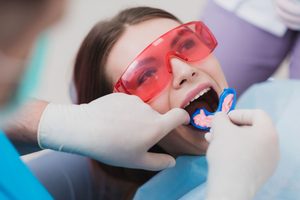
You may already know that seeing your dentist every 6 months for a routine checkup and cleaning can help prevent common oral issues, such as cavities and gum disease. But if you’ve heard negative things about fluoride and its effects on people, you might be surprised if they also recommend a topical treatment containing this active ingredient to help protect your smile.
However, there are many rumors circulating among the public about fluoride and how it affects people that might have influenced your opinion on the matter. Continue reading to learn about 3 falsehoods you may have heard that you shouldn’t necessarily believe!
Myth #1: Fluoride is a Medication
It’s easy to assume that fluoride is a medication because it’s a service offered at your dentist’s office that can halt and sometimes even reverse the earliest stages of tooth decay. It’s even included in dental products, such as toothpaste or mouthwash, which might lead you to assume that it’s man-made or created in a laboratory.
But the truth is that fluoride is a naturally occurring element. In fact, it’s the 13th most common chemical found in the earth’s crust, and is therefore present in rock, soil, lakes, rivers, oceans, rain, and growing vegetation. That said, this element is processed into specific chemical compounds for use in oral hygiene products or public supplies of drinking water.
Myth #2: Fluoride in Drinking Water is Harmful
Fluoride was first added to a community water source in the year 1945, after it was discovered to prevent cavities. By the 1960s, this practice was more widely adopted across municipal water systems throughout the country, and was backed by official organizations, such as the American Dental Association.
Today, critics sometimes contest this inclusion, arguing that it carries health risks. It’s true that overexposure to high amounts of fluoride can potentially cause staining or pitting in the enamel, referred to as dental fluorosis. But only a small, safe dosage is added to drinking water, as approved by several major health organizations, including the Centers for Disease Control and Prevention (CDC).
Myth #3: Fluoride Is Not Recommended for Kids
If you’re the parent or guardian of a younger child, your family dentist may have recommended using a pea-sized amount of toothpaste to brush their earliest teeth, and to monitor their oral hygiene routine until they’re about 7 or 8 years old. This is partly because they may still lack the fine motor skills to thoroughly clean their mouths, but it may also stem from the fact that small children are more prone to swallowing toothpaste, which can cause an upset stomach or even fluoride overexposure.
But that doesn’t mean kids should stay away from this ingredient altogether. In fact, many dentists offer topical fluoride treatments in child-friendly flavors to help strengthen their still-developing smile.
If you have additional pressing questions or concerns about fluoride or how it’s used, you can learn more by contacting your dentist!
Meet the Author
Dr. Douglas Gammenthaler is passionate about helping patients build and maintain healthy smiles to help prevent problems before they occur. He earned his Doctorate of Dental Surgery from Loma Linda University School of Dentistry, and today, he is dedicated to providing a comprehensive menu of services, including fluoride treatments, to meet the unique needs of people of all ages. His caring approach is paired with advanced technology to deliver comfortable, accurate results meant to last. You can request an appointment on the website or call (479) 888-5362.